
Roulette Wheel Differences: Why American Roulette Is Mathematically Inferior to European Roulette

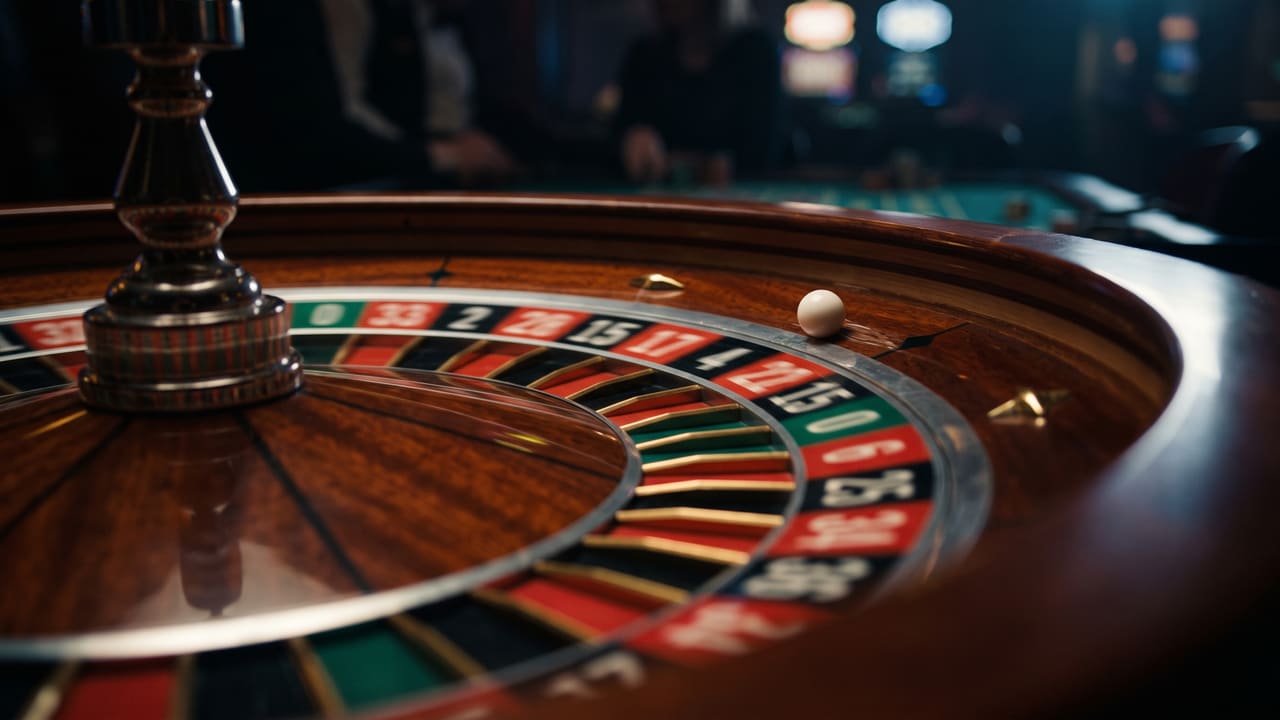
Few sights on a casino floor command attention quite like a polished wooden roulette wheel spinning beneath bright chandeliers. The ivory-colored ball rattles along the outer rim, bounces unpredictably across metal frets, and finally drops into a numbered pocket to cheers or groans from a gathered crowd. For casual gamblers, roulette often appears entirely uniform: red or black, odd or even, high or low, with payouts that seem generous enough to promise an entertaining evening.
Beneath the physical spectacle lies a rigid mathematical framework. Walk between different pits in the same casino, or compare land-based setups in Nevada with gaming rooms in Monte Carlo or modern online lobbies, and you will notice an essential architectural difference. One wheel carries a single green pocket marked with a zero. The other adds a second green pocket bearing a double zero. That single extra pocket might look like a harmless cosmetic variation, but it fundamentally transforms the mathematics of the game. It doubles the house edge, accelerates bankroll depletion, and makes American roulette one of the least favorable table wagers on the casino floor.
Wheel Anatomy: The Single Zero vs. The Double Zero
To grasp why the two formats perform so differently over time, you have to break down how each wheel is physically constructed.
The European wheel features 37 numbered pockets, running from 0 through 36. Eighteen pockets are colored red, eighteen are colored black, and the single zero pocket is green.
The American wheel contains 38 numbered pockets. It incorporates the identical numbers from 1 through 36 in alternating red and black, along with the single green zero (0), but introduces an additional green pocket designated as double zero (00).
The visual sequence of the numbers on the cylinder is also entirely different. The European layout distributes high and low, red and black, and odd and even numbers in a carefully balanced arrangement where low numbers (1 to 18) and high numbers (19 to 36) alternate as evenly as possible around the rim. The American layout places consecutive numbers directly opposite each other across the diameter—such as 1 facing 2, and 3 facing 4—while sandwiching the zero and double zero directly across from one another. While these distribution patterns have no impact on the underlying odds of an honest, balanced wheel, the difference in total pocket count dictates everything that follows.
The Mathematical Breakdown of the House Edge
In casino games, the house edge is the mathematical advantage the venue holds over the player across a large volume of trials. It represents the percentage of each wager that the house can reliably expect to retain over time.
Roulette payouts are calculated as if the wheel possessed fewer pockets than it actually does. On both wheels, a winning wager on a single straight-up number pays out at 35 to 1.
If you place a straight-up bet on a European wheel, there are 37 possible outcomes. The true mathematical odds against your number hitting are 36 to 1. Because the casino pays you only 35 to 1 when you win, it keeps the difference as its operating profit margin.
Expressing this through expected value yields a precise figure:
On a European wheel, your expected return on a one-dollar straight-up wager is calculated by multiplying the payout of 35 by the probability of winning (1/37), and subtracting the probability of losing (36/37) multiplied by your stake of one dollar. The calculation produces an expected value of negative 0.027, establishing a baseline house edge of 2.70%.
On an American wheel, the presence of the double zero expands the total outcomes to 38, yet the payout for a straight-up hit remains locked at 35 to 1. The true odds against hitting your chosen number jump to 37 to 1.
Applying that same formula to the 38-pocket wheel produces an expected return of negative 0.0526. The baseline house edge climbs to 5.26%.
By merely sitting down at an American wheel instead of a European one, you surrender nearly double the mathematical advantage to the house on virtually every bet on the layout, with zero increase in potential payout.
Even-Money Wagers: A Closer Look at the Probabilities
Many players avoid straight-up numbers, preferring instead to play outside bets like red/black, odd/even, or high/low (1-18/19-36). These wagers pay even money (1 to 1), leading some gamblers to assume they represent a 50-50 proposition.
They do not. The green zero pockets are the mechanism through which the casino claims its edge on outside wagers. When the ball lands on a green zero, standard even-money bets lose automatically.
On a European wheel:
-
There are 18 winning red pockets out of 37 total pockets.
-
The probability of hitting red is 18 divided by 37, which equals 48.65%.
-
The house edge remains steady at 2.70%.
On an American wheel:
-
There are 18 winning red pockets out of 38 total pockets.
-
The probability of hitting red drops to 18 divided by 38, or 47.37%.
-
The house edge holds firm at 5.26%.
While a 1.28% dip in win probability might feel imperceptible across a short burst of ten or fifteen spins, its compounding effect across an entire session is brutal. If you churn five thousand dollars in total action over an evening of play, an average expected loss of roughly $135 on a European wheel balloons into an expected loss of over $260 on an American wheel.
The Five-Number Bet: The Worst Wager on the Felt
The structural flaws of the American wheel become even more pronounced when examining combination bets. The American layout features a unique combination wager known as the “basket” or “five-number bet,” covering 0, 00, 1, 2, and 3.
This bet pays 6 to 1. With five winning pockets out of 38, the true odds against winning are 33 to 5 (or 6.6 to 1).
When you compute the house advantage on this specific wager, it surges to 7.89%. It stands as the absolute worst fundamental wager on any standard roulette layout, penalizing the player with an enormous house retention rate that rivals poorly configured slot machines.
Special Rules That Widen the Gap
The advantage of European roulette is occasionally amplified further by regional table rules rarely, if ever, extended to American tables.
In traditional European gaming establishments and premier online casinos, wheels often operate under rules known as En Prison or La Partage. Both rules apply exclusively to even-money outside bets when the ball lands on zero:
-
Under La Partage, if the ball drops into the zero pocket, the dealer does not sweep the entire table. Instead, half of every even-money stake is immediately returned to the player, while the house claims the remaining half.
-
Under En Prison, the player’s even-money bet is locked in place (“imprisoned”) for the following spin. If the bet wins on the next spin, the player gets their original wager back in full without extra profit; if it loses, the house takes the chips.
Both rules cut the house advantage on even-money bets in half, reducing it from 2.70% down to a remarkably slim 1.35%. At 1.35%, playing outside bets on a European wheel approaches the favorable odds found in optimal blackjack or basic craps pass-line play.
By contrast, standard American roulette tables almost never offer La Partage or En Prison. A roll of zero or double zero results in an immediate, total loss of all outside bets, cementing the punishing 5.26% house edge.
The Triple Zero Trend: An Even Deeper Trap
In recent years, the mathematical degradation of roulette has pushed beyond the American double-zero model. Many modern gaming floors, particularly along the Las Vegas Strip, have introduced triple-zero wheels, sporting 39 pockets that include a zero, double zero, and an additional emblem pocket (often depicting the casino’s logo).
The payouts on a triple-zero wheel remain unchanged: 35 to 1 on straight-up bets, and even money on outside propositions.
With 39 pockets in play, the house edge leaps to an astronomical 7.69% across the entire table. The emergence of the triple-zero wheel proves a basic rule of casino mechanics: when a operator alters a game’s physical layout without adjusting payouts, the change is designed entirely to accelerate player losses. Just as the double zero degraded the traditional European single-zero framework, the triple zero compounds the penalty.
The Practical Takeaway for Serious Players
Roulette is fundamentally a negative-expectation game of pure chance. No betting progression, pattern-tracking system, or physical timing method can overcome the fixed mathematical probabilities established by the wheel’s design. The ball does not retain memory of previous spins, and every rotation is a completely independent event.
Because you cannot control the outcome of the spin, your only meaningful strategic decision happens before you place your first chip: choosing which wheel to approach.
Accepting an American wheel when a European option is accessible is the equivalent of willingly paying twice as much for the exact same entertainment. The European single-zero layout offers a significantly lower house edge, superior winning probabilities on every spin, and access to rule variations that can compress the house margin down to 1.35%. From an objective, mathematical standpoint, the American wheel is an inferior product, engineered to harvest bankrolls at twice the speed of its continental counterpart.
Comments are closed.