

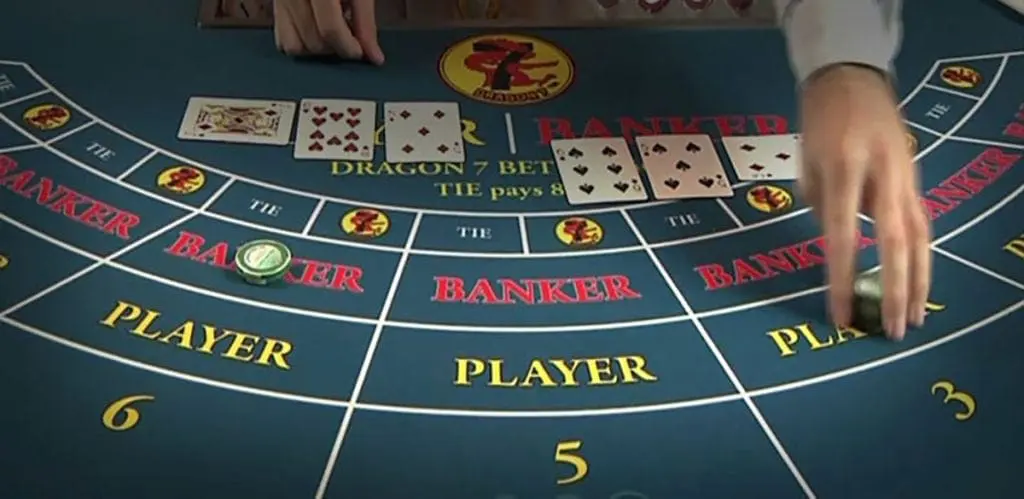
Walk into any high-limit gaming salon in Las Vegas, Macau, or Atlantic City, and the scene is almost identical: velvet ropes, quiet intensity, and stacks of chips shifting across felt tables where players barely touch the cards. Baccarat carries an air of aristocratic exclusivity that intimidates casual players, yet beneath the ceremony lies one of the simplest and most player-friendly games on the casino floor. Unlike blackjack, there are no hit-or-stand choices to agonize over. Unlike poker, there is no psychological warfare against opponents.
The mechanics run on strict, automated dealing protocols known as the tableau. The dealer handles the execution, leaving players with just one primary decision before every hand: where to put their money. While you can back the Player, the Banker, or a Tie, pure mathematics dictates that one of these options stands head and shoulders above the rest. Backing the Banker is not an old-school superstition or a lazy habit of high rollers; it is a calculated choice driven by the mathematical architecture of the game.
The Core Foundations of the Game
To understand why the Banker holds an undeniable structural edge, you first have to understand how a hand resolves. Baccarat is played with a shoe containing six or eight standard decks. Two hands are dealt: the Player and the Banker. Despite their labels, the Banker does not represent the house, and the Player does not represent you. They are simply two competing outcomes on which anyone can place a wager.
The objective is deceptively simple: finish with a point total closest to nine. Hand totals are calculated by summing the numerical values of the cards, with face cards and tens counting as zero, aces counting as one, and cards two through nine counting at face value. Whenever the total reaches double digits, the first digit is discarded. A hand consisting of a seven and an eight totals fifteen, which drops the ten to become a five. A four and a five total nine, representing an unbeatable natural.
If either the Player or Banker receives an initial two-card total of eight or nine, it is declared a natural, and the round ends immediately without further cards. If neither hand holds a natural, the game proceeds to a predetermined set of drawing rules that govern whether a third card is dealt.
The Asymmetry of the Third-Card Rule
The third-card drawing rules are where the true mechanics of baccarat live. Many players sit at tables for years without ever memorizing these rules because the dealer executes them automatically. However, understanding this sequence reveals exactly why the Banker holds a persistent statistical advantage.
The rules are entirely asymmetric. The Player hand always acts first, following a rigid protocol:
If the Player hand totals zero through five, it must draw a third card. If it totals six or seven, it stands.
Because the Player hand resolves its entire action before the Banker takes any step, the Banker gains positional awareness. This mirrors the structural advantage found in games like Texas hold’em, where acting last provides critical leverage.
The Banker does not simply draw based on its own total; its actions depend on two variables: its current two-card sum and the exact third card drawn by the Player.
How the Banker Drawing Rules Function
If the Player stands pat on a six or seven, the Banker follows the same simple standard: draw on zero through five, and stand on six or seven. But when the Player draws a third card, the Banker’s strategy shifts dynamically to exploit that card:
If the Banker totals two or less, it always draws a card, regardless of what the Player drew.
If the Banker totals three, it draws unless the Player’s third card was an eight.
If the Banker totals four, it draws only if the Player’s third card was between two and seven.
If the Banker totals five, it draws only if the Player’s third card was four, five, six, or seven.
If the Banker totals six, it draws only if the Player’s third card was a six or seven.
If the Banker totals seven, it always stands.
Notice the deliberate design of these contingencies. When the Banker holds a total like four, five, or six, it draws only when the Player’s third card makes it statistically likely that the Player holds a weak final total or that the drawn card will improve the Banker’s position. This responsive rule set acts as a built-in mathematical buffer, significantly reducing the frequency with which the Banker busts or finishes with a losing sum.
The Numbers Behind the Edge
Because the Banker acts second with conditional drawing rules, it wins more often than the Player hand across any meaningful sample size. When we look at standard eight-deck baccarat, excluding tie outcomes:
The Banker hand wins roughly 50.68% of all resolved decisions.
The Player hand wins roughly 49.32% of all resolved decisions.
Casinos exist to make money, and they do not offer favorable odds out of generosity. Because the Banker wins more than half of all non-tie hands, an unadjusted even-money payout would grant the player an immediate positive expectation against the house. To preserve their mathematical advantage, casinos impose a 5% commission on winning Banker bets. If you wager one hundred dollars on the Banker and win, you receive ninety-five dollars in net profit.
Even with that five percent commission deducted, the Banker wager remains the premier bet on the table:
The Banker bet carries a house edge of just 1.06%.
The Player bet carries an uncommissioned house edge of 1.24%.
The Tie bet, which typically pays eight to one, carries a punishing house edge of roughly 14.36%.
A difference between 1.06% and 1.24% might appear negligible over twenty minutes of play, but in probability, small margins compound relentlessly. Over thousands of hands, choosing the Banker saves significant bankroll capital compared to backing the Player, while steering clear of the Tie bet protects you from catastrophic variance.
The Illusion of Baccarat Scoreboards
Walk by any baccarat pit and you will see electronic displays lighting up the table with colorful grids, dots, and lines. These scoreboards—known in casino parlance as the Big Road, the Bead Plate, the Small Road, the Cockroach Pig, and the Big Eye Boy—track the outcomes of previous hands in intricate visual patterns.
Many players spend hours analyzing these boards, hunting for streaks where the Banker wins four times in a row, or searching for alternating chop patterns where the Banker and Player trade wins back and forth. They scribble notes, adjust their bet sizing based on trendlines, and convince themselves that a specific outcome is overdue.
This is a textbook manifestation of the gambler’s fallacy. Baccarat shoes contain independent trials governed by sampling without replacement. While card removal technically alters the composition of the remaining shoe slightly, the impact on basic outcomes is miniscule until the final cards are reached, at which point the shoe is replaced anyway.
The cards do not possess memory. A Banker hand winning five times in succession has zero mechanical bearing on whether the Banker or Player will win the sixth hand. The scoreboard is a brilliantly designed casino amenity intended to create the illusion of control and encourage action. Relying on patterns will never overturn the baseline house edge; relying on foundational math will always point you right back to the Banker.
Tactical Considerations: Dealing with Commission
The primary friction point for casual players betting the Banker is managing the commission. In traditional physical casinos, dealers track your commission on a small marked grid next to the chip tray rather than collecting five percent on every single winning hand. At the end of the shoe or when you leave the table, you settle that accumulated commission debt before cashing out.
Some modern tables offer No-Commission Baccarat, sometimes branded as Punto 2000 or Super 6. At these tables, winning Banker bets are paid at true even money without the manual five percent deduction. While this sounds like an upgrade, casinos never surrender edge without a countermeasure.
To offset the lost commission, these games implement a specific rule: whenever the Banker wins with a three-card total of six, the payout is reduced to 50% of the original wager (or in some variations, pays even money while pushing the bet). That single rule adjustment pushes the house edge on the Banker bet up from 1.06% to roughly 1.46%—making it statistically worse than standard commission baccarat and inferior to the standard Player bet. If mathematical efficiency is your goal, stick to traditional commission tables.
Playing the Edge with Long-Term Discipline
Baccarat does not require split-second arithmetic or memorized strategy charts. Its brilliance lies in the fact that its optimal strategy can be summarized in three words: bet the Banker.
By committing to the Banker, you align yourself with the built-in positional edge created by the third-card tableau, secure the lowest house edge available in the room, and eliminate the costly impulse to chase high-payout sucker bets like the Tie. Variance will always produce short-term fluctuations, and cold streaks are an unavoidable reality of probability. However, when you cut through the spectacle and focus strictly on game mechanics, backing the Banker remains the clearest, most mathematically sound path to preserving your capital and maximizing your chances at the table.
Comments are closed.